An ape safari in Uganda is an unforgettable adventure that allows you to observe gorillas, chimpanzees, and other primates in their natural habitats.
Apes are mammals belonging to the primate family Hominoidea. Its members are called hominoids and they are native to Africa and Southeast Asia. Most people usually confuse Apes with monkeys but one clear difference between monkeys and apes is that monkeys almost always have tails, but hominoids never do.
There are also differences in their teeth and the way they move their arms. Apes have a wide degree of freedom at the shoulder joint, which helps them swing by their arms in the trees.
Are Apes and humans similar?
The diets of apes are similar to those of other primates. They eat fruits, nuts, seeds, leaves and sometimes other animals. They are generally omnivores, though most of their intake is primarily herbivorous.
Apes and humans share a common ancestor, and apes are among the closest living relatives of humans, sharing almost 99% of their DNA.
Humans are also part of the Hominoidea super family, and are therefore classified as apes. Mountain gorillas are one of the most endangered creatures in the world and have been put on the IUCN Red List as critically endangered animals and conservation efforts are in place to save the remaining population.
What does an ape Safari in Uganda entail?
An ape safari trip to Uganda basically involves two activities; gorilla trekking, and chimpanzee trekking but first, here’s everything you need to know about gorilla trekking in Uganda.
Mountain gorilla safari in Uganda
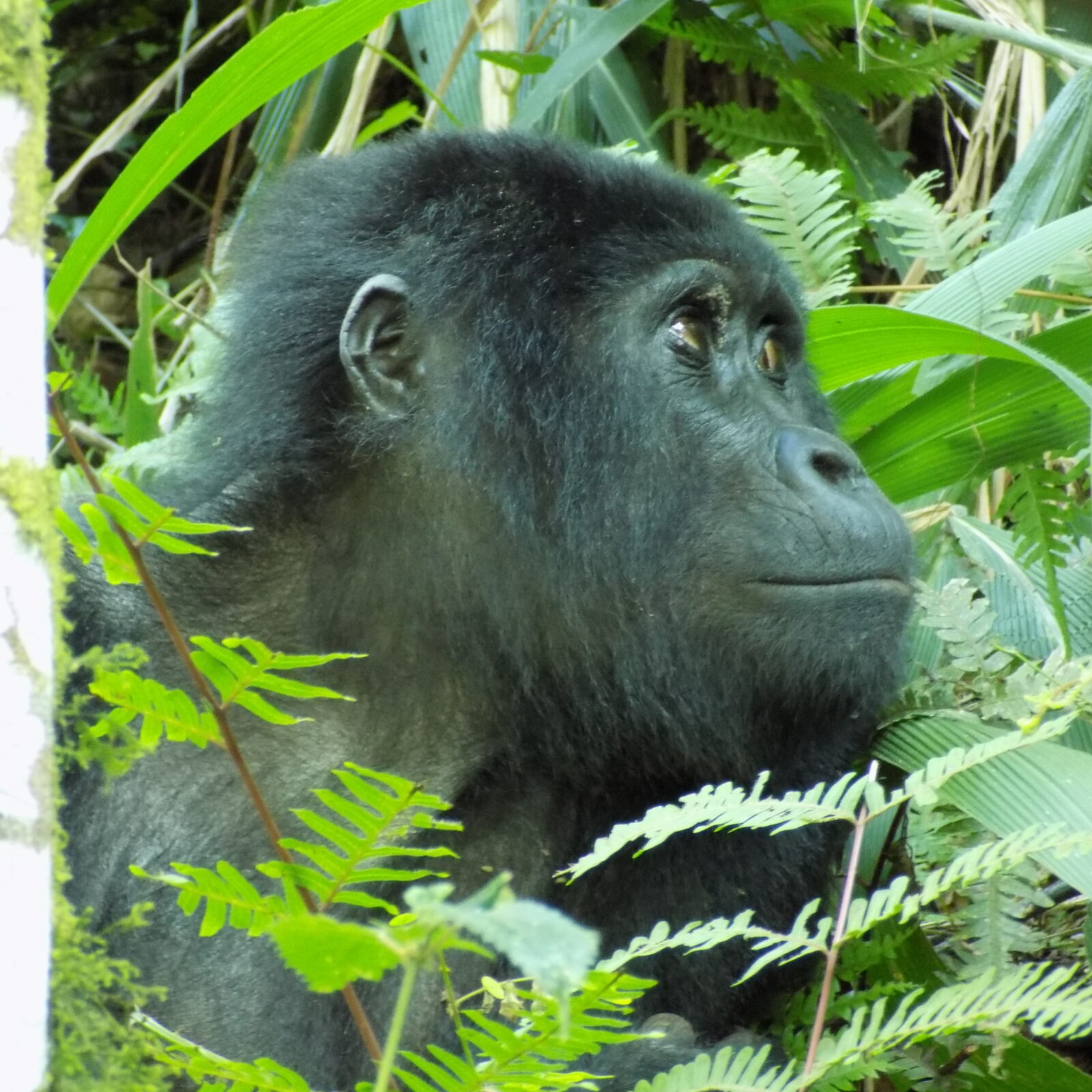
Mountain gorillas in Uganda are found in the Bwindi Impenetrable and Mgahinga National Parks, all located in the Virunga ranges neighbouring Rwanda and DRC, which offers breath-taking views of hills, thick vegetation and a unique opportunity to observe these creatures in their natural habitat. Uganda is home to almost half of the world’s gorilla population and seeing these creatures can only be done in Uganda, Rwanda and DRC.
These gorillas have thick fur, broad chest, and prominent facial features.
What is the gorilla trekking process and experience like?
The best time for gorilla trekking in Uganda is during the dry months, from December to February and June to September. However, trekking can be done throughout the year, but the rainy seasons (April-May and November) can make the terrain more challenging.
The trekking experience typically begins early in the morning, around 7:00 am, with a briefing from park rangers. You’ll then embark on a guided hike through the forest, which can take anywhere from 2 to 9 hours, depending on the location of the gorilla family. Once you find the gorillas, you’ll have one hour to observe them in their natural habitat.
To go gorilla trekking in Uganda, you’ll need to obtain a permit, which costs $800 per person, payable to the Uganda Wildlife Authority. The permit includes park fees, guide services, and a contribution to conservation efforts.
Besides gorilla trekking, Bwindi Impenetrable National Park offers other exciting activities, such as hiking, bird watching, nature walks, participating in conservation efforts, and interacting with the local Batwa community that reside in the forest.
Chimpanzee trekking in Uganda
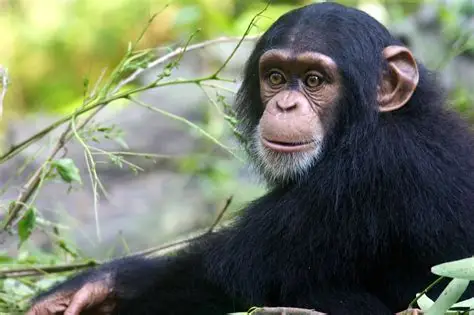
On the other hand, chimpanzee trekking in Uganda is done in Kibale National Park which boasts a population of about 1,500 chimpanzees with a 90-95% chance of spotting them. These chimpanzees are agile, intelligent and very social animals. They reach a height of 4-5feet when standing up and an adult chimpanzee weighs about 37-59kgs.
Chimpanzees have a stocky build, with a large torso, strong arms, and shorter legs.
Their fur is thick, dark brown and covers their entire body, except for their face, hands, and feet.
Chimpanzees also have long, strong arms that are well-suited for climbing and swinging through trees. Their legs are shorter and more muscular, with a distinctive gait when walking upright.
What is the chimpanzee trekking experience like?
Just like Gorilla trekking, the best time for chimpanzee trekking in Uganda is during the dry months, from December to February and June to September.
The chimpanzee trekking experience in Uganda is unique and thrilling. The trek can take around 2-3 hours, and once you find the chimps, you’ll have one hour to observe them. The experience is also led by experienced park guides and rangers who will ensure your safety and provide insights into the chimps’ behaviour.
To go chimpanzee trekking in Uganda, you’ll need to obtain a permit, which costs $150 per person, plus a $100 park entrance fee and bookings can be made directly to the Uganda Wildlife Authority or a licenced travel agency. Apart from Kibale National Park, chimpanzees can be found in Budongo forest reserve located in Murchison Falls NP with a population of about 600 chimps amongst large mahogany trees, Kyambura gorge (Valley of the Apes) in Queen Elizabeth NP and Kalinzu Forest reserve.
Both chimpanzee and gorilla trekking can be challenging due to dense forests and steep terrain, so ensure that you’re in perfect physical health for the hike. There are porters available to help you carry any luggage you may have but it is not usually necessary. People hire porters just to support the locals who are striving to make a living.
All these ape destinations offer top notch accommodations ranging from luxury to budget hotels/lodges or hostels. These destinations also have camping sites available for those interested, for an even more exciting experience. Important to remember is that the roads leading to these destinations are very challenging especially during the rainy season so hire a 4×4 vehicle for a smooth ride