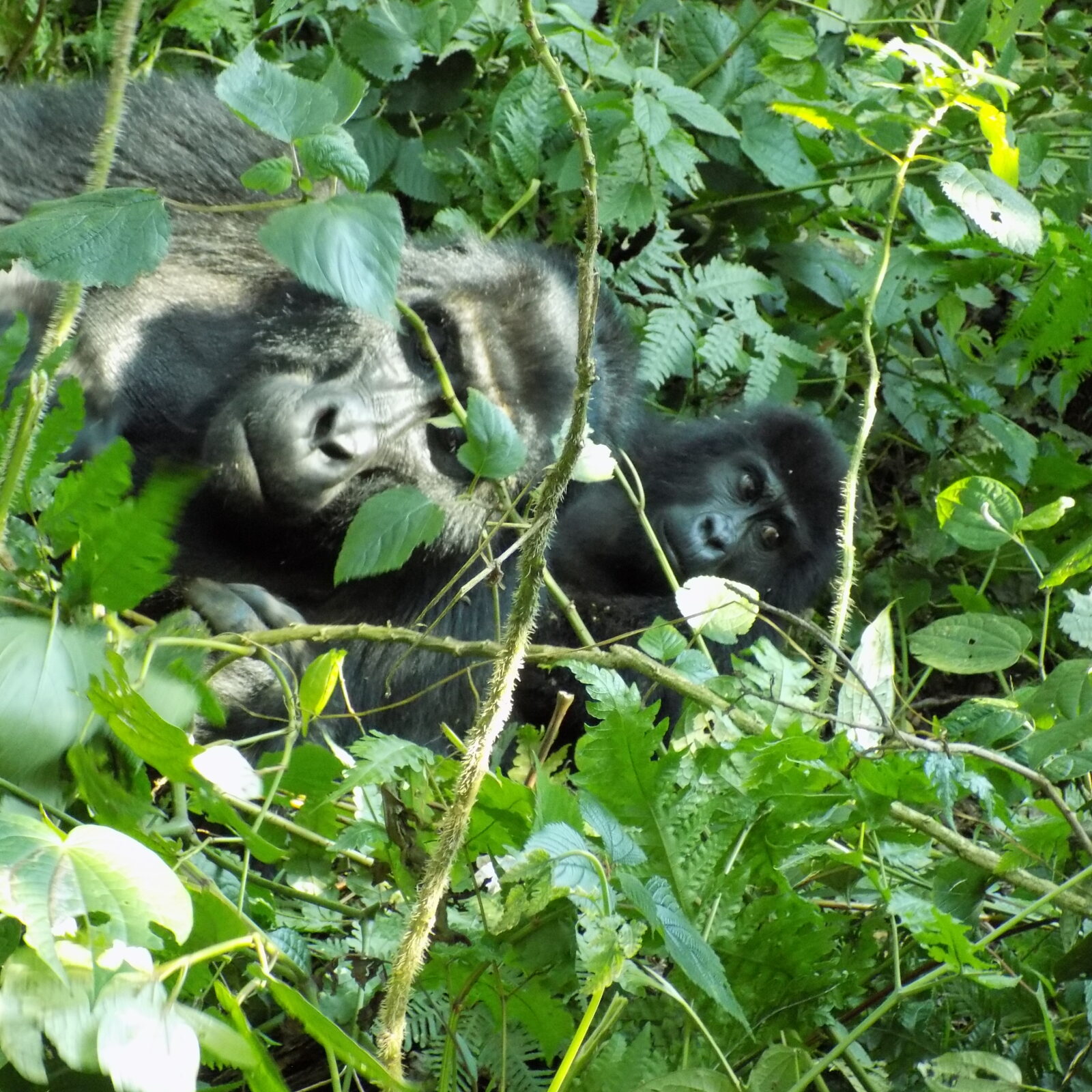
Gorilla trekking is one of the most thrilling activities to add to your travel bucket list this summer! Mountain gorillas (Gorilla beringei beringei) are a subspecies of the eastern gorilla, with thick, dark brown fur that helps them survive in cold climates.
Adult males can weigh up to 220 kg (485 lbs) and reach 1.8 meters (6 feet) tall.
Also, mountain gorillas have a broad chest and strong muscles, which enable them to move through dense vegetation.
When going for gorilla trekking, remember that mountain gorillas live in social groups, typically consisting of 5-30 individuals. The dominat male, known as the Silverback leads each group. Mountain gorillas feed on leaves, shoots, fruits, and insects.
The gorillas share about 98.8% of their DNA with humans. They also exhibit complex emotions, such as empathy, grief, and even culture-specific behaviors.
Why is gorilla trekking a must-do?
The IUCN placed mountain gorillas on the endangered animals RED LIST due to habitat loss, poaching and disease. Conservation organizations, governments, and local communities are working together to protect mountain gorilla habitats and populations.
As a matter of fact, Uganda and Rwanda are home to the surviving population of these endangered creatures. That is why a safari trip to Uganda or Rwanda is incomplete without gorilla trekking.
Gorilla trekking is a thrilling adventure that allows you to observe these majestic creatures in their natural habitat. Both Uganda and Rwanda offer unforgettable gorilla trekking experiences.
This blog highlights some of the differences and similarities of the gorilla trekking experiences in both countries.
Where can you go for gorilla trekking?
Mountain gorillas inhabit the Virunga Mountains, spanning across the borders of the Democratic Republic of Congo, Rwanda, and Uganda. They live in high-altitude forests, typically between 2,200-4,300 meters (7,200-14,100 feet) above sea level.
For gorilla trekking in Rwanda, visit Volcanoes National Park with a population of about 604 mountain gorillas.
On the other hand, in Uganda it is Bwindi Impenetrable and Mgahinga gorilla National Park with a population of about 400 gorillas.
Note that all of these parks are within in the Virunga ranges, known for their thick vegetation and high altitudes. The big difference is that Uganda’s gorilla habitats are more dense and forested while Rwanda’s habitats are more open and mountainous.
How is the gorilla trekking experience?
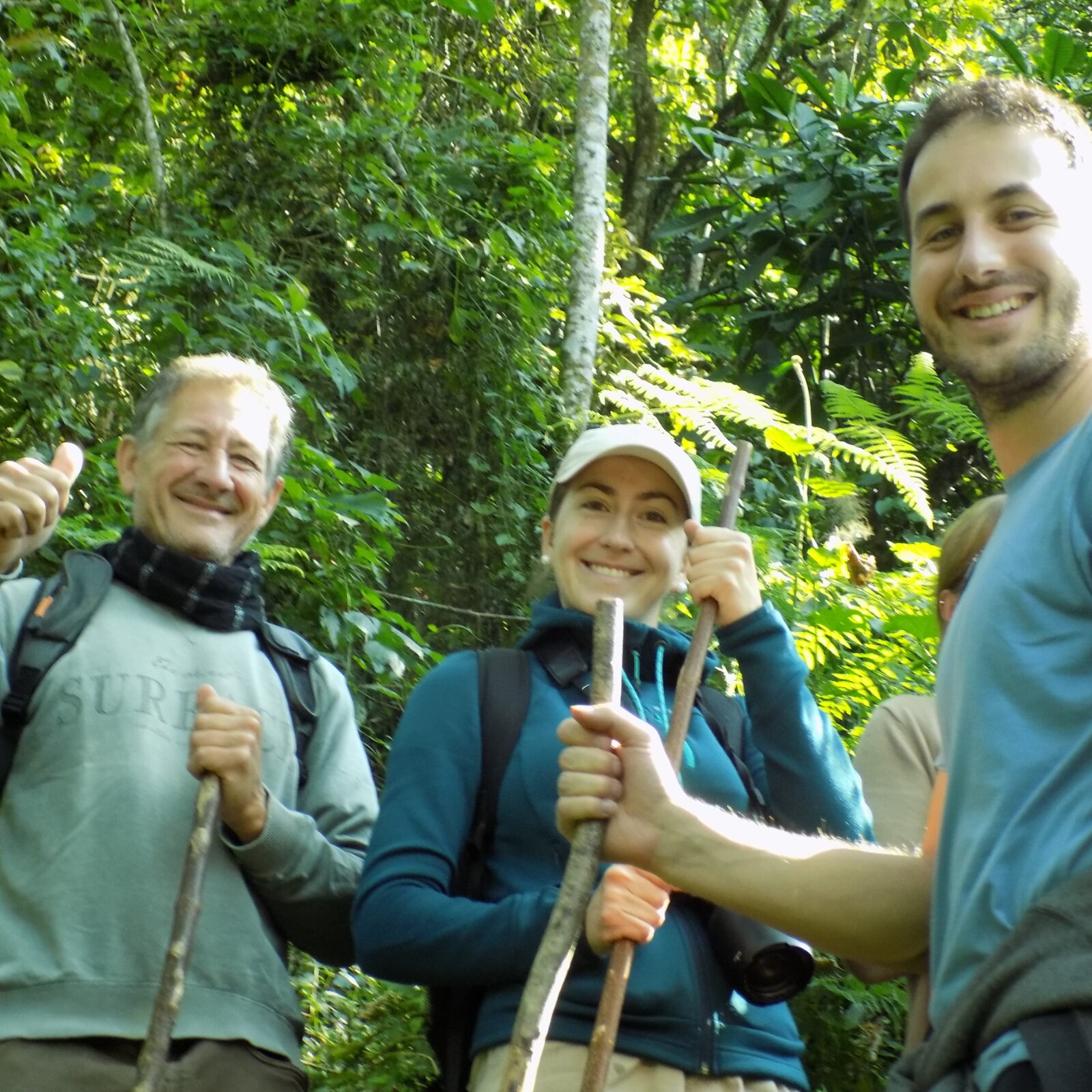
Trekking in both countries is led by experienced guides and rangers who will ensure your safety and provide insights into the gorilla behaviour. The trek can take anywhere from 2-6 hours in Rwanda, and 2-8hours in Uganda depending on the location of the gorillas.
Uganda’s trek is often more challenging due to the terrain and altitude of the parks.
However, Rwanda’s trekking is generally easier, because of the more accessible and defined trails. Trekking in both countries is done in groups of people each day. Only about 8 people are allowed to trek each day.
How much is Gorilla trekking?
The cost of a gorilla trekking permit in Rwanda is $1500 which is paid to the Rwanda Development Board.
In Uganda, the activity is $800 per person, paid to the Uganda Wildlife Authority. It is also safe to book your gorilla permits through your tour operate. At Jungle Uganda Car Rental, we book permits for both Uganda and Rwanda for our clients at no extra cost!
The permits for both countries include park entry fees, guide services and a contribution to conservation efforts.
Note that these permits are limited and run out easily, so it is important to purchase yours in advance to avoid missing out.
More so, the most frequently asked question is why the huge difference in the price of the permit? This is because Rwanda deliberately targets a high-end, luxury and lower-volume tourism market. This strategy, combined with superior infrastructure and shorter travel times (2-3) hours from Kigali, and the exclusive accommodation justifies the premium price.
On the other hand, Uganda positions herself as a more affordable option. First of all, reaching Bwindi involves an 8-10 hour drive from Entebbe Airport. The competitive advantage here is that before reaching Bwindi, most tourists plan their itinerary in a way that they can make detours to other safari destinations on the same route. They do not usually drive the entire 8-10 hours to the park.
When is the best time for gorilla trekking?
Both Uganda and Rwanda have the same climate characterized by the same wet and dry seasons. The best time for gorilla trekking in both countries is during the dry season of June to September and December to February. You can also go gorilla trekking in the rainy season, but the terrain can be more challenging.
Safety precautions
Both countries demand that one has to be perfect health to participate in gorilla trekking. You should be physically able to walk long distances at high altitudes and must not have contagious diseases like flu or other viral infections. This is because since gorillas share almost 98% of the human DNA, they can easily contract human diseases.
More still, Gorilla trekking is a tedious activity that involves hours of hiking in search of the mountain gorillas. You need to be in good physical health because of risks like altitude sickness, depending on how far up into the ranges you go.
Most importantly, have a yellow fever vaccination certificate to trek gorillas in both countries.
Accommodation
Both countries have accommodation options around the parks. These range from budget to luxury, offering stunning views and ultimate comfort.
How to get there
Getting to Bwindi or Volcanoes National Parks is simple! All you have to do is rent a vehicle for self-drive or rent a car with a driver. You will need a 4×4 vehicle. This can easily handle the challenging road conditions leading to the parks.
At Jungle Uganda Car Rental, our 4×4 vehicles are very reliable, and in good mechanical condition. We equally experienced and professional drivers. If you are considering gorilla trekking in Rwanda, we also have vehicles in Rwanda to ensure a smooth transfer.
Conservation efforts
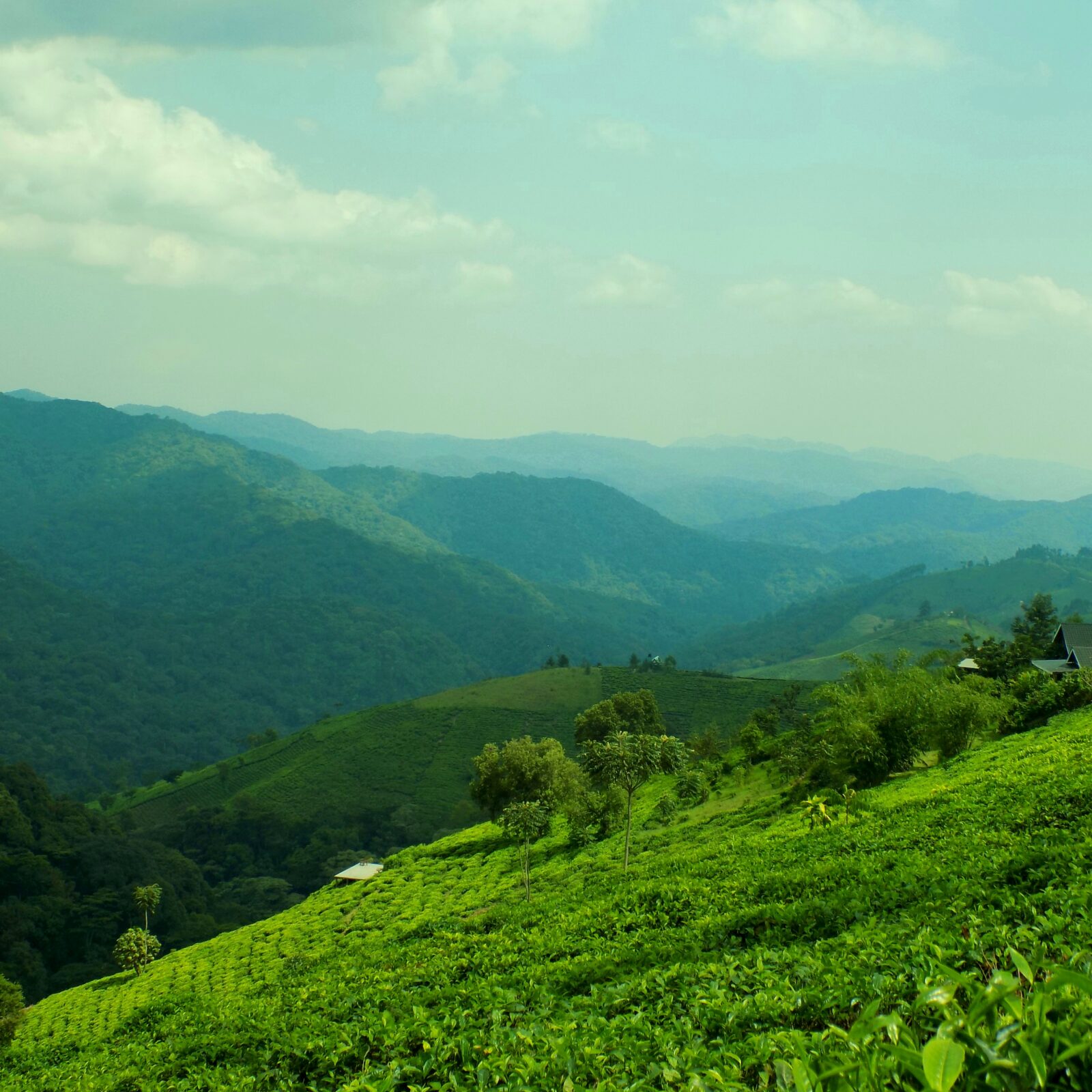
Both Uganda and Rwanda have conservation efforts in place to protect the surviving gorilla population and their habitats. One can participate by making donations towards the conservation funds or by purchasing arts and crafts made by the locals.
So which country should you consider for gorilla trekking?
This is one of the most difficult questions to answer given the fact that each country provides unique trekking experiences.
However, we advise that you consider the Ugandan experience if you’re travelling on a budget. If you are more adventurous and prefer a denser and more forested habitat, Uganda is still a better option.
Consider Rwanda if you prefer a more open and mountainous habitat, with high end accommodations and services.
All in all, the ball is in your hands! It is essential to research more and consider your individual preferences and priorities before making a decision.